Home
Solutions
PulseAbout usContactCompliance & reporting
Energy consumption monitoringISO 50001CSRD / Scope 2Energy invoice verificationRenewables & flexibility
PPA contractRetail is a business model built on repetition: the same store layout, the same opening hours, the same installations — replicated across dozens, hundreds or thousands of locations. That repetition is what makes the model profitable. It is also what makes energy one of the hardest costs here to control.
A single store or restaurant is an engineering problem, and a manageable one. A chain of them is a different kind of problem entirely. At scale, energy stops being a budget line that gets optimised once and forgotten — it becomes a moving target spread across hundreds of buildings.
Each site sits in its own microclimate, has its own customer traffic and drifts a little further from optimal from one week to the next. A few percent of loss multiplied by the size of a national chain becomes one of the largest controllable operating costs in the business.
Most EMS-class energy tools were designed for one building at a time: the system is installed, tuned and watched on a dashboard. That model breaks the moment there are more locations than technicians.
In a large chain the real losses hide in the aggregate. No single store looks "broken".
Worn, but still closing. The freezer works harder — and nobody detects it.
Shuts down an hour after the store closes. Every day, for three years.
Set for a different season and untouched ever since.
Individually, none of these shows up in a spreadsheet. Together, across the whole chain, they are a standing charge against the profit and loss account — one nobody is watching, because nobody can watch everything at once.
Retail runs on a repeating daily and annual rhythm. Ignoring that rhythm costs money in every hour.
A static schedule cannot keep up with a store's rhythm. It has to be controlled hour by hour.
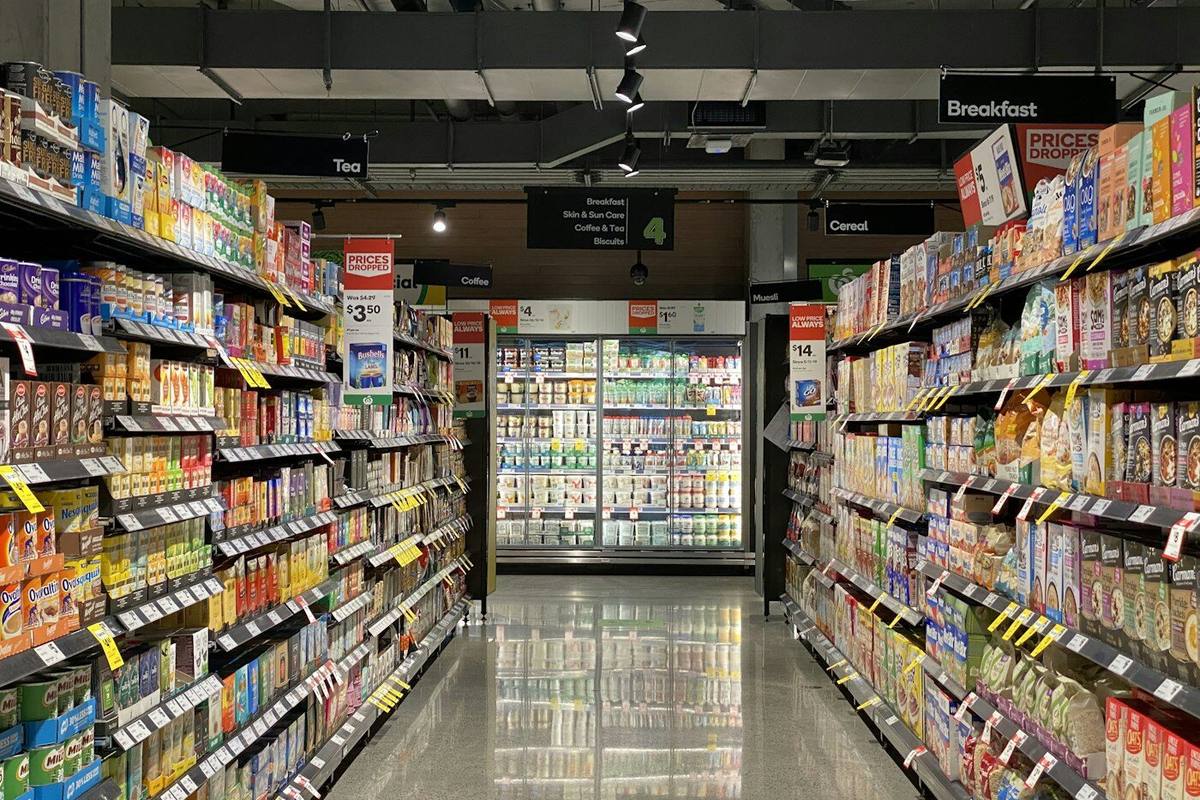
Sales floor empty. Lighting, ventilation and refrigeration still running.
Layered on top are the pressures every chain operator recognises today: volatile wholesale energy prices, capacity charges that penalise demand peaks, ESG obligations that require hard consumption data, and customers and investors who expect a credible sustainability story.
Comfort still comes first — a store that is uncomfortable, or where the fridge glass is fogged, loses sales. The task is therefore to protect that comfort and at the same time remove everything being consumed for nothing.
Percee® is an Energy Management and Optimisation System (EMOS). In retail that distinction matters more than almost anywhere else, because it decides whether somebody has to watch charts every day.
| Monitoring platform | BMS / automation | EMOS — Percee® | |
|---|---|---|---|
| Scope | site or chain | one site | the whole chain as one system |
| What it does with data | shows consumption | executes setpoints | decides and controls |
| Decision horizon | the past | now | weather and price forecast a day ahead |
| Who acts | a person, after analysis | a person, at the setpoint | the system, automatically, every day |
| Effect on the bill | depends on the team's response | local and static | continuous and measurable across the chain |
A monitoring platform shows which stores are wasting energy. A BMS controls one location at a time. Percee® does both across the whole chain, taking forecasts and energy prices into account — and then acts in line with the agreed company policy.
The multi-site performance engine continuously compares every location against the others, normalising for size, climate and operating profile so the comparison is fair. Instead of scrolling through hundreds of dashboards, the energy manager gets a list of the worst-performing sites.
The findings do not stay on the dashboard. Once the system identifies what the best-performing store does differently, those settings can be propagated across the chain. An improvement in one store becomes the reference point for all of them.
Percee® learns how each location actually behaves, then optimises against that pattern:
Outside opening hours the system cuts consumption sharply, because in an empty store there is no comfort to protect.
The cold rooms already standing on site are energy storage. They only need to be controlled.
Cold rooms hold temperature well. Percee® pre-cools them in cheaper hours and eases the load on the units during the expensive peak — always within the safe ranges the products require.
Defrost cycles are planned around price troughs. The setpoint always respects HACCP but is allowed to move within its band, instead of running identically around the clock. The result is that refrigeration stores cold while energy is cheap and gives it back when energy is expensive.
In a chain with intensive refrigeration, shifting load this way typically reduces refrigeration energy costs by 20 to 30 percent, with full respect for safety standards.
When an unusual consumption pattern appears in a store, the team gets an alert immediately. Very often the anomaly is the first sign of a fault: ventilation beginning to struggle, windows left open, equipment running when it should be off.
In retail that early warning is worth more than the energy bill alone. A refrigeration fault caught within hours rather than days is the difference between a minor correction and writing off stock.
Chains grow, and every new location has to be brought under management. Onboarding a new site takes days, not months — optimisation starts generating savings almost immediately, rather than after a long commissioning project.
Energy prices no longer stand still, and that volatility is an opportunity for an operator with flexible loads. Percee® integrates with the day-ahead market, with PPA contracts and with dynamic tariffs, shifting flexible consumption into cheaper hours automatically.
Percee® records consumption continuously, broken down by circuit, so lighting, ventilation, cooling and heating can be viewed and reported separately. That data feeds reporting obligations with verified figures instead of estimates.
Audit-ready data for:
For a retail brand under growing reporting pressure, reporting stops being an annual scramble and becomes a by-product of managing the chain well. Every kilowatt-hour not consumed is both a lower bill and a smaller carbon footprint — both documented as they happen.
General-purpose building automation was designed with single office buildings in mind. Retail is a different reality: industrial-grade complexity replicated across a large, distributed chain in which customer comfort is exceptionally important.
Percee EMOS integrates with the BMS, meters, controllers and sensors the chain already owns — with no infrastructure stripped out and no lock-in to a single supplier.
It optimises electricity, heating, cooling and the remaining utilities together, rather than one system at a time.
It takes over automatic control every day, instead of producing a report and waiting for somebody to respond to it.
Up to thousands of locations managed as one coherent system, onboarded at over 300 sites per month.
The result is a chain of stores or restaurants that costs less to run, keeps customers comfortable, catches equipment faults before they turn into losses, and delivers audit-ready sustainability data as a matter of course. For a business defined by thin margins and constant repetition, that improvement applies everywhere at once.
The typical reduction in energy costs falls between 20 and 30%. In chains where refrigeration is a significant load, the saving on refrigeration alone is of a similar order. The specific result depends on the share of flexible loads, the quality of metering and the starting point — which is why we begin with an analysis of the consumption profile.
No. Percee® is a layer above the existing automation. It integrates with the BMS, meters and controllers already installed, and adds the decision about when and at what price to consume energy. Replacing the infrastructure is not necessary.
Days, not months. If the automation at a site does need modernising, our team can competently handle that project as well.
Comfort is a hard constraint, not a variable to be optimised. During opening hours the system maintains conditions on the sales floor, and delivers the reduction outside those hours and by shifting loads the customer never sees.
Yes. Consumption is recorded per circuit, which makes it possible to report lighting, ventilation, cooling and heating separately and to feed Scope 2 accounting and ISO 50001 documentation with measurement rather than estimates.
One chain, one decision layer, savings in every store at once.
Percee® manages a retail chain as a single system: it compares every location, learns each store's rhythm, treats refrigeration as energy storage and takes over control automatically every day — protecting customer comfort and delivering audit-ready data.
 EN
EN PL
PL