Home
Solutions
PulseAbout usContactCompliance & reporting
Energy consumption monitoringISO 50001CSRD / Scope 2Energy invoice verificationRenewables & flexibility
PPA contractIndustrial manufacturing is the hardest energy problem there is — but not because of the volume it consumes. The difficulty is that energy is essential to the technological process itself: temperature, pressure, humidity and time are parameters of the product, not settings of a building. Savings in a production plant therefore call for a software vendor with real experience.
This is what separates manufacturing from every other sector. Optimising the building alone leaves most of the potential unused, and optimising the process itself is in practice unavailable: nobody lowers a technological parameter in order to pay less for electricity.
What is needed is a system that knows the relationship between making products and consuming energy, and knows what must not be touched — not one that treats a plant as an ordinary building with a few machines inside. Percee® was built for exactly this.
Three things make energy management in manufacturing require a different tool than an office block or a shop.
Firing temperature, press pressure, humidity in the dryer are quality parameters. Lowering them is not a saving, it is a defect.
Each one is run by a different system, often from a different supplier, tuned once at commissioning and in isolation from the rest.
Volatile wholesale prices, a rising capacity charge and ESG reporting that reaches down to the individual item.
The most valuable savings hide in the gaps between systems, in interactions no single-vector tool can see. A dryer setting that looks efficient on its own can force additional load onto a humidifier somewhere else. Waste heat from the refrigeration systems escapes into the atmosphere while a boiler a few metres away heats water from cold.
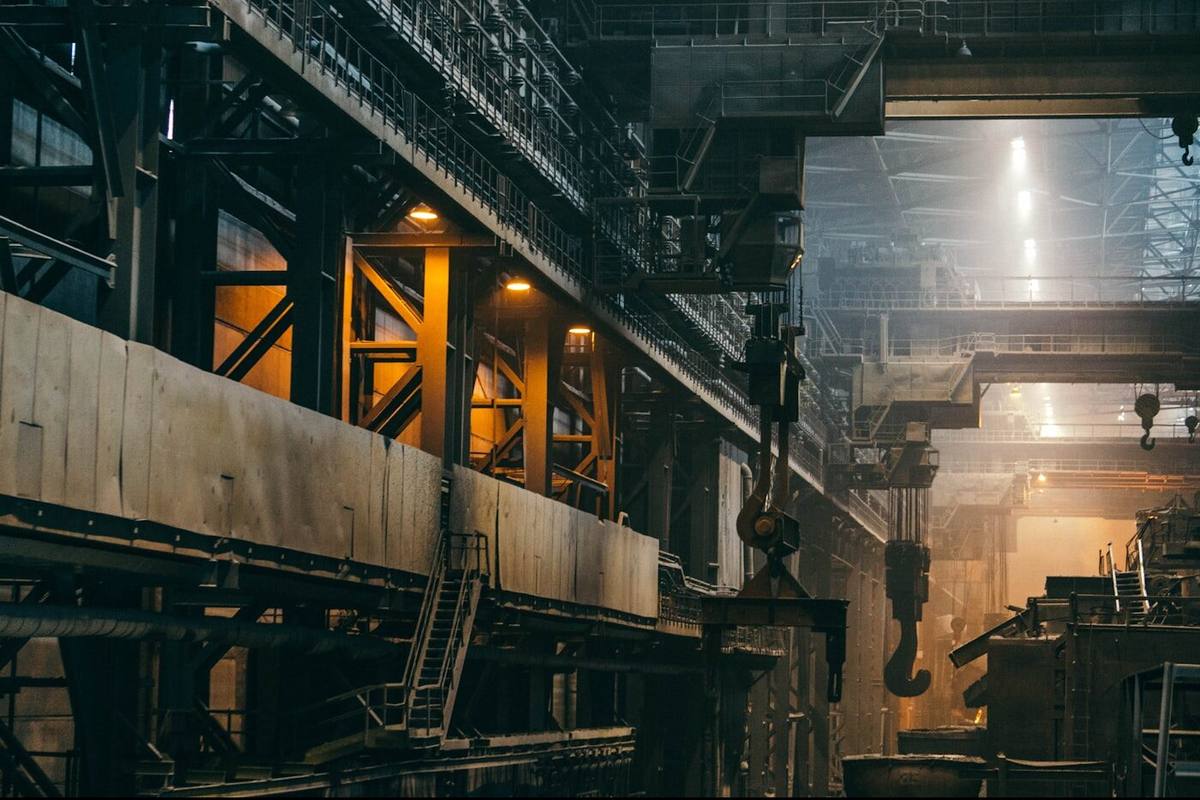
Diligently drying the air while, on the other side of the hall, a humidifier just as diligently puts it back.
Standard building-automation logic fails here for a simple reason: it does not distinguish an idle period that can be used from a critical production window that must not be disturbed.
On top of that comes the regulatory and market environment. The capacity charge for business rose by roughly 55 percent in 2026, and ESG reporting increasingly asks not for a plant-wide emissions figure but for the carbon footprint of specific products, batches and orders. A manufacturer who cannot attribute consumption to what was actually made will have a real problem with that.
Percee® is an Energy Management and Optimisation System (EMOS). In manufacturing that means three things working together: it manages every utility at once, it knows the production process, and every day it takes over automatic control — instead of producing a recommendation for somebody to act on later.
The technological process sets the limits, but it does not account for all the consumption. Around it works a layer of auxiliary utilities: refrigeration, steam, process hot water, compressed air, drying, humidification, process ventilation and circulation pumps. That layer is often unmetered and tuned once, at commissioning, while its share of the energy bill is high. This is where the savings potential is largest and most often untouched — lowering a compressor's consumption changes nothing in the product.
It needs coordinated management of refrigeration, steam for cooking, hot water for washdown, compressed air for packaging and electricity to drive the motors.
The opportunities percee® finds often sit between the "vectors" — which is why an approach based on single systems misses them by definition rather than by oversight.
Percee® integrates with production planning systems and with MES, so it knows what the plant is doing and what it intends to do. That knowledge is what lets it look aggressively for savings in flexible windows and hold off entirely in critical ones.
The optimisation adapts to the plant, not the plant to the optimisation. Cost falls with no detriment whatsoever to production volume or quality.
In a plant with large motors, heating elements and process equipment that can all start at once, simply spreading those peaks out in time is worth real money. Percee®'s demand management logic keeps controlled consumption below the contracted capacity, eliminating penalties for exceeding it.
Where a plant takes part in demand-side response programmes (DSR), that same controllable flexibility becomes a source of revenue — paying the manufacturer for load it can shift on request.
The largest energy store in the plant is already standing on the floor — as cold, heat and thermal mass.
Waste heat recovery is done by hardware: an exchanger, a heat pump, a buffer tank. Percee® does not replace those devices — it decides when they should run, and from the metering data it shows where recovery will pay, before the decision to install anything is made. The cold stores and thermal mass it already controls it uses as a store: charging in cheap hours, discharging in expensive ones — always within the tolerances the process requires.
On-site batteries and energy storage are managed the same way: charged when energy is cheap, discharged when it is expensive.
A plant working a single shift has a consumption profile well matched to output from a PV installation — the case in which self-consumption pays best, because energy from the roof stays in the process instead of going to the grid at the export price. Percee® maintains that match: it shifts controllable auxiliary loads into the hours of highest generation, charges the cold stores and hot water tanks then, and on two- and three-shift operation tops up the day from storage and from the market.
With dynamic tariffs the same logic works on hourly prices: compressors, dryers and circulation pumps avoid the most expensive hours, while the technological process is left untouched. PPA contracts are settled on the same principle.
Percee® automatically calculates a carbon footprint tied to production data. Most energy tools report emissions for the whole plant. The question customers and auditors ask today is a different one: how much energy and how many emissions did this particular product, this batch, this order cost.
The precondition is metering, and that is the part most easily skipped. A footprint calculated from a single meter at the plant boundary is an estimate divided among products by a key. A footprint calculated from meters on the lines, in the compressor room, the boiler house and on the chillers is the result of measurement — and only that kind will stand up to an auditor, and to a customer asking about a specific delivery. Precise metering here is a condition of credibility, not an add-on. Percee® collects data at whatever resolution the metering provides, and points out the places where adding a meter turns an estimate into a number.
What this changes in practice:
Percee® gives full visibility across the whole plant and, for multi-site manufacturers, across the entire portfolio, with automatic benchmarking comparing lines, facilities and equipment. When consumption departs from the expected pattern, the team gets an immediate alert.
Very often such an alert catches a failing motor, a compressed air leak or a fouling heat exchanger before it turns into a costly breakdown or a quality problem. Energy flows can be inspected on a digital twin of the facility — which makes diagnosis far more tangible than a spreadsheet of meter readings.
The system is hardware-independent. It integrates with the BMS, SCADA, meters, sensors and PLCs, and with the ERP and MES the factory already uses — adding intelligence without ripping out existing infrastructure and without tying the manufacturer to a single supplier. It reads equipment state and sends control commands, acting like a virtual operator making thousands of decisions a day. Strategic decisions and oversight stay with people.
Standard automation was designed with office blocks in mind. A factory is its opposite in almost every dimension.
| Office block | Production plant | |
|---|---|---|
| Energy vectors | usually one | six and more, mutually dependent |
| Goal of optimisation | human comfort | production: volume, quality, deadline |
| What shapes consumption | occupancy and weather | the production schedule |
| Largest loads | building HVAC — controllable | the technological process — mostly untouchable |
| Where the savings are | in HVAC and scheduling | in the auxiliary utilities and their coordination |
| Reporting | at facility level | at product and batch level |
The result for a manufacturer is a plant that costs less to run with no detriment to volume or quality, that avoids penalties for uncoordinated demand peaks, recovers energy previously wasted and can report a carbon footprint down to the level of a single order — without one change to the process specification. In a sector where margins and delivery commitments leave no room for disruption, that is a structural advantage applied across the whole operation.
Yes, and that is the normal starting point in manufacturing. Technological parameters stay untouched, and the savings come from the layer of auxiliary utilities: refrigeration, steam, hot water, compressed air, drying and humidification, and from the hours in which those utilities run. That layer is often unmetered and tuned once, at commissioning — which is why its potential is the largest.
No. The production plan is a hard constraint for the system, not a variable. Percee® integrates with MES and planning systems, so it recognises critical windows and does not interfere with them. It looks for savings where the process tolerates flexibility in time, and in the auxiliary utilities.
No. Percee® is hardware-independent and integrates with the BMS, SCADA, PLCs, meters and with the existing ERP and MES. It works as a supervisory layer — it adds the decision, it does not replace the infrastructure.
The typical reduction in manageable energy cost falls between 20 and 30%. The specific result depends on how many utilities the plant runs, the share of flexible loads in its profile, the quality of the metering and how much waste heat escapes today. That is why we start with an analysis of the consumption profile and a map of energy flows.
Yes — provided the system has access to production data. Percee® ties energy consumption to data from MES and ERP, so emissions can be attributed to a specific product, production run or customer order, with audit-ready documentation.
The largest savings lie in the interactions between utilities, not inside them. A compressed air setting can look optimal while generating additional cooling load somewhere else. A single-system tool cannot see that dependency — not because it is a bad tool, but because it is looking at one row.
The process stays untouched. The auxiliary utilities work as one system.
Percee® manages electricity, heat, cooling, compressed air, steam and process water together — in sync with the production schedule and within the limits the technological process will not allow it to cross. It optimises those systems simultaneously, so it finds opportunities that single-system approaches miss. It does not monitor the plant and hand over a report. It controls.
 EN
EN PL
PL