Home
Solutions
PulseAbout usContactCompliance & reporting
Energy consumption monitoringISO 50001CSRD / Scope 2Energy invoice verificationRenewables & flexibility
PPA contractThis sector operates under a constraint no other feels quite so absolutely: temperature is not a comfort setting but a safety requirement. Going outside the range is not an inconvenience — it is a food safety breach.
This is the tension at the heart of the sector. Energy bills are large, the pressure to lower them is real, but the one thing that must never be sacrificed is temperature control.
Any optimisation that saves money by stepping outside the safe limits is not an optimisation but a hazard. The task is to lower cost significantly while preserving food safety absolutely — and that takes a system that understands both energy and that constraint.
Refrigeration is the single largest load in many plants. It runs without interruption and never stops needing energy, because the product never stops needing cold. That concentration is a problem, but also an opportunity: the largest load holds the largest potential.
The complication is that refrigeration in a food plant is not one system but several — often spread across many zones or many units, each with its own temperature requirements.
Large mass of goods, stable temperature, round-the-clock load.
Deep freezing, the highest power draw per unit of volume.
Rapid product temperature pull-down, short cycles with very high demand for cold.
On the production line, the load rises and falls with output.
These systems often share compressors and infrastructure, but each controller sees only its own circuit and holds the temperature in it. Nobody looks at them together: which hours they run in, how they load one another, and what the energy they are drawing at that moment costs.
On top of that comes the market environment: volatile wholesale energy prices, a capacity charge that rose by roughly 55 percent for business in 2026, and growing reporting pressure from retail chains and the regulator.
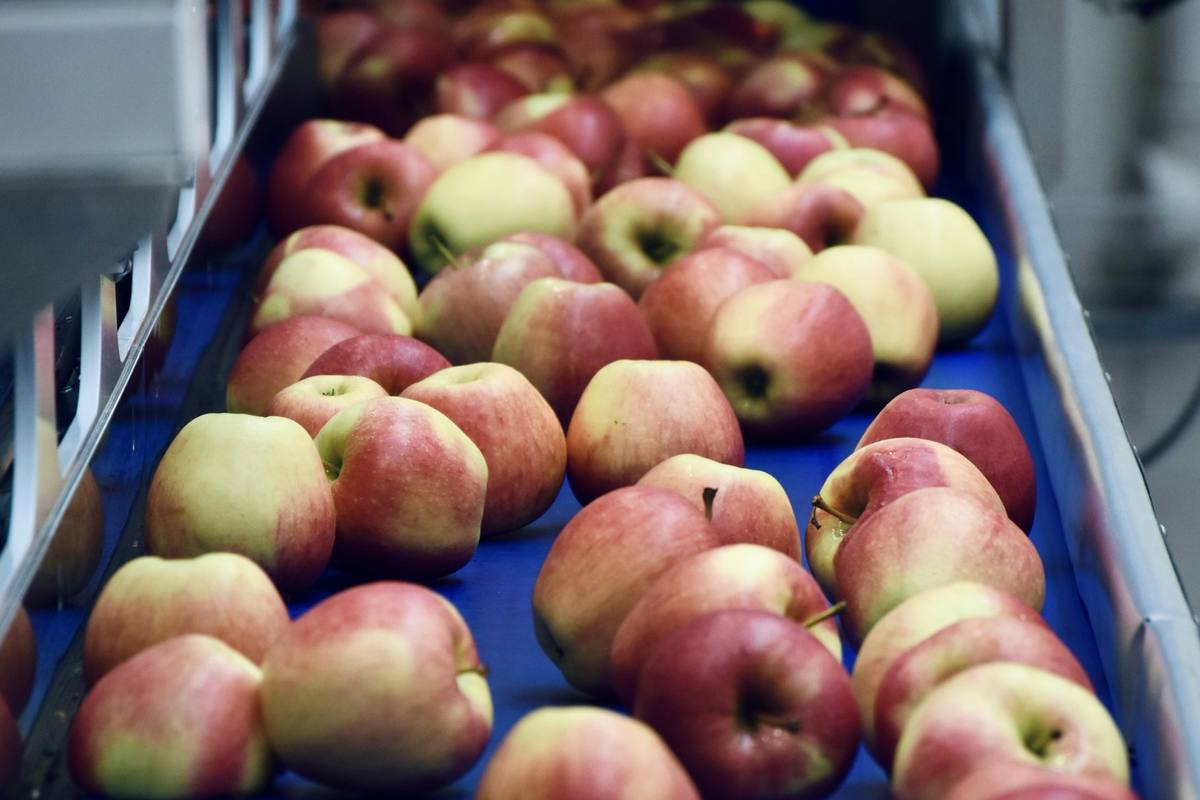
The temperature range is not a comfort setting. It is a condition the product has to meet.
This is the heart of what percee® does in this sector. A cold store holds temperature, which means the system can pre-cool during low-price hours and ease the compressors off at the peak. The product never leaves its safe range — the system only chooses the moment of cooling.
The refrigeration plant already running in the building is a thermal battery.
It stores cold at the right price and releases it when that matters. Shifting the load lowers refrigeration costs by 20–30 percent — and because refrigeration is 40–60% of the whole bill, the effect shows up in the energy cost of the entire plant.
The refrigeration controllers stay where they are. Percee® does not take over their work — it adds a layer of energy decisions above them.
Percee® does not replace refrigeration controllers and does not take over refrigeration competence. Choosing setpoints, servicing the installation and responsibility for the process stay where they were: with the qualified team and the automation the plant already has. Percee® adds one layer above it — the energy layer. It decides in which hours the plant reaches for cold, not how that cold is produced.
Within that layer it coordinates cold stores, blast freezers and production areas so as to minimise total consumption, instead of optimising each element separately:
Where a plant takes part in demand-side response programmes (DSR), that same controllable flexibility becomes an additional source of revenue. None of these decisions changes the way the refrigeration circuit itself works — what changes is the moment at which the plant reaches for cold.
Alongside cold, a food plant uses steam for cooking, hot water for washdown and sanitation, compressed air for packaging and electricity to drive the motors. Each of these utilities is usually managed separately — and the savings hide precisely in the dependencies between them.
The most obvious: waste heat from refrigeration pre-heats the washdown water instead of escaping into the atmosphere while, close by, a boiler heats the same water from cold. Production schedules are, where the process allows it, coordinated with energy prices — with no effect on output volume or food safety.
The refrigeration setting, the boiler cycle and the demand for compressed air are not separate problems in a food plant. They are parts of one energy system. How multi-vector optimisation works in manufacturing →
Everything percee® does in a food plant happens under the discipline of temperature safety. The platform monitors conditions continuously, and anomaly detection immediately surfaces unusual patterns — a failing compressor, a wearing door seal, a unit drifting from its setpoint.
If a fault is detected, control is suspended and staff are notified.
Percee® includes self-diagnostics that continuously verify equipment and communications. If something is not working as it should, the system does not try to optimise blind — it hands back control and flags the problem. Automation never becomes a hazard to the product.
In a sector where catching a refrigeration fault within hours rather than days is the difference between a correction and a write-off, that early warning is worth far more than the energy bill alone.
Percee® records consumption broken down by circuit and by utility, supplying verified data instead of estimates.
Audit-ready data for:
Retail chains and consumers increasingly demand that level of detail, wanting to know the footprint of the specific goods they buy. It turns energy from an overhead split by rough approximation into a cost that can be attributed precisely.
General-purpose automation was built to deliver comfort in an office. Food processing is an entirely different problem.
| Office block | Food plant | |
|---|---|---|
| Role of temperature | a comfort setting | a food safety requirement |
| Consequence of exceeding it | discomfort | a batch written off |
| Dominant load | building HVAC | refrigeration, 40–60% of the bill |
| Operating hours | office hours | around the clock, without a break |
| Number of cold zones | none | from a few to dozens, each with its own range |
The system is hardware-independent, so it integrates with the refrigeration controllers, BMS, SCADA, meters, sensors and production systems the plant already uses — replacing none of them. Across multi-site companies and cold chain networks it manages many facilities as one system, with centralised dashboards and automatic benchmarking.
No. The HACCP-compliant temperature range is a hard boundary for the system, not a parameter to be optimised. Percee® moves strictly inside that range and changes only the moment at which the plant buys cold. On top of that, self-diagnostics suspend control if an equipment or communication fault is detected.
No, and that is not what percee® is for. The system is hardware-independent and integrates with the refrigeration controllers, BMS, SCADA, meters and production systems already running in the plant. Refrigeration competence — setpoints, servicing, responsibility for the process — stays with the team and its automation. Percee® works as a supervisory layer: it coordinates zones a single controller cannot see, and chooses the hours in which they run.
The reduction in refrigeration cost usually falls between 20 and 30%. Because refrigeration accounts for 40–60% of the bill, that translates into a significant saving across the whole plant. The specific result depends on the thermal mass of the cold stores, the number of zones and the spread of market prices.
The system enters a safe mode: it suspends optimisation control, leaves the equipment in its own logic and notifies staff. In parallel, anomaly detection often flags the problem before it turns into a temperature excursion.
Yes, provided the system has access to production data. Energy consumption is tied to production data, so emissions can be attributed to a product, a run or a customer order, with audit-ready documentation — which is increasingly what retail chains require.
A lower bill without touching the one thing that can never change.
Percee® treats refrigeration as a manageable resource, coordinates every cold zone and every energy carrier together and takes automatic action every day — all of it inside the temperature range food safety requires. The refrigeration plant, and the people who know it, stay exactly where they are. Percee® adds an energy layer above them.
 EN
EN PL
PL